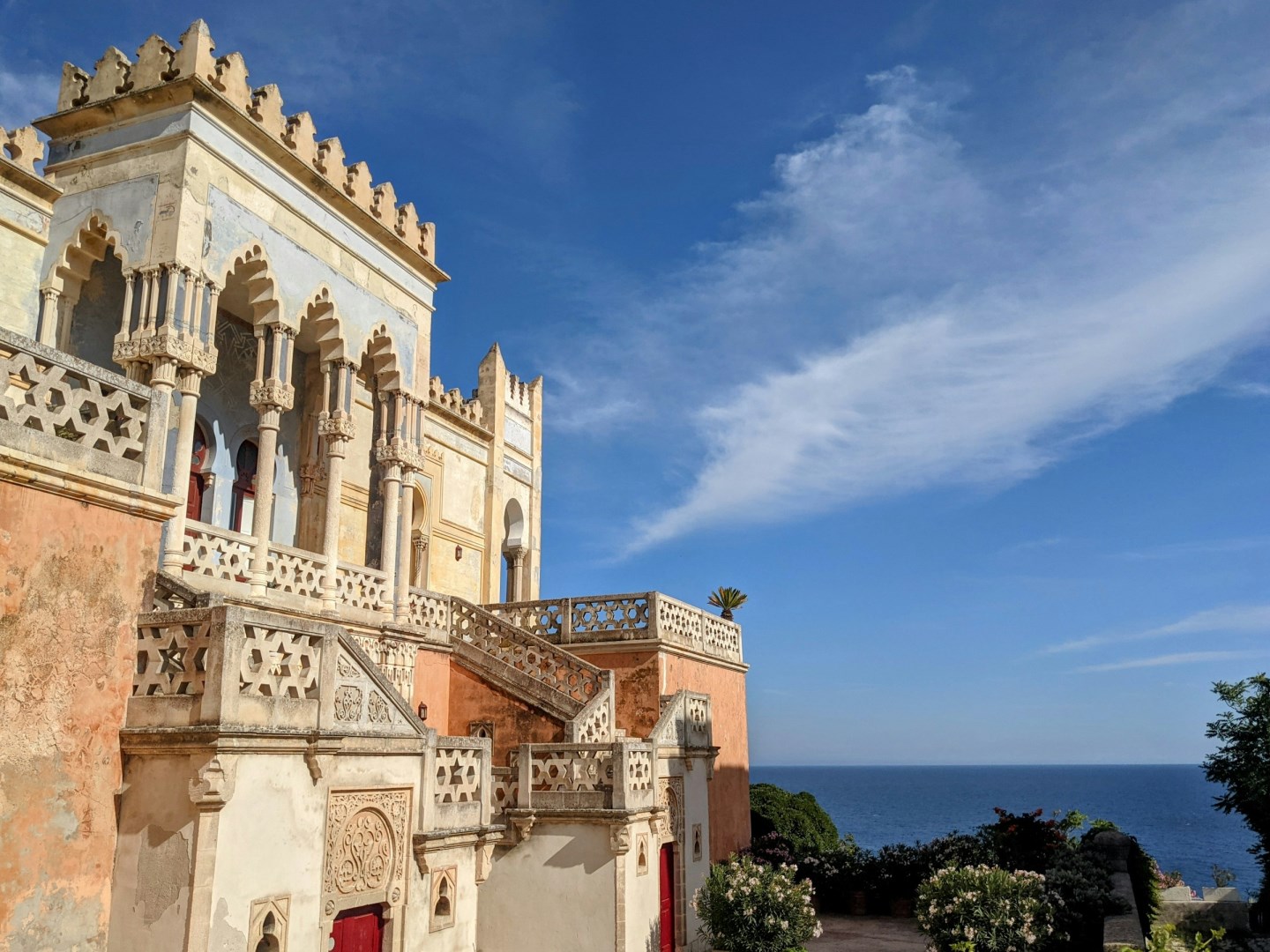
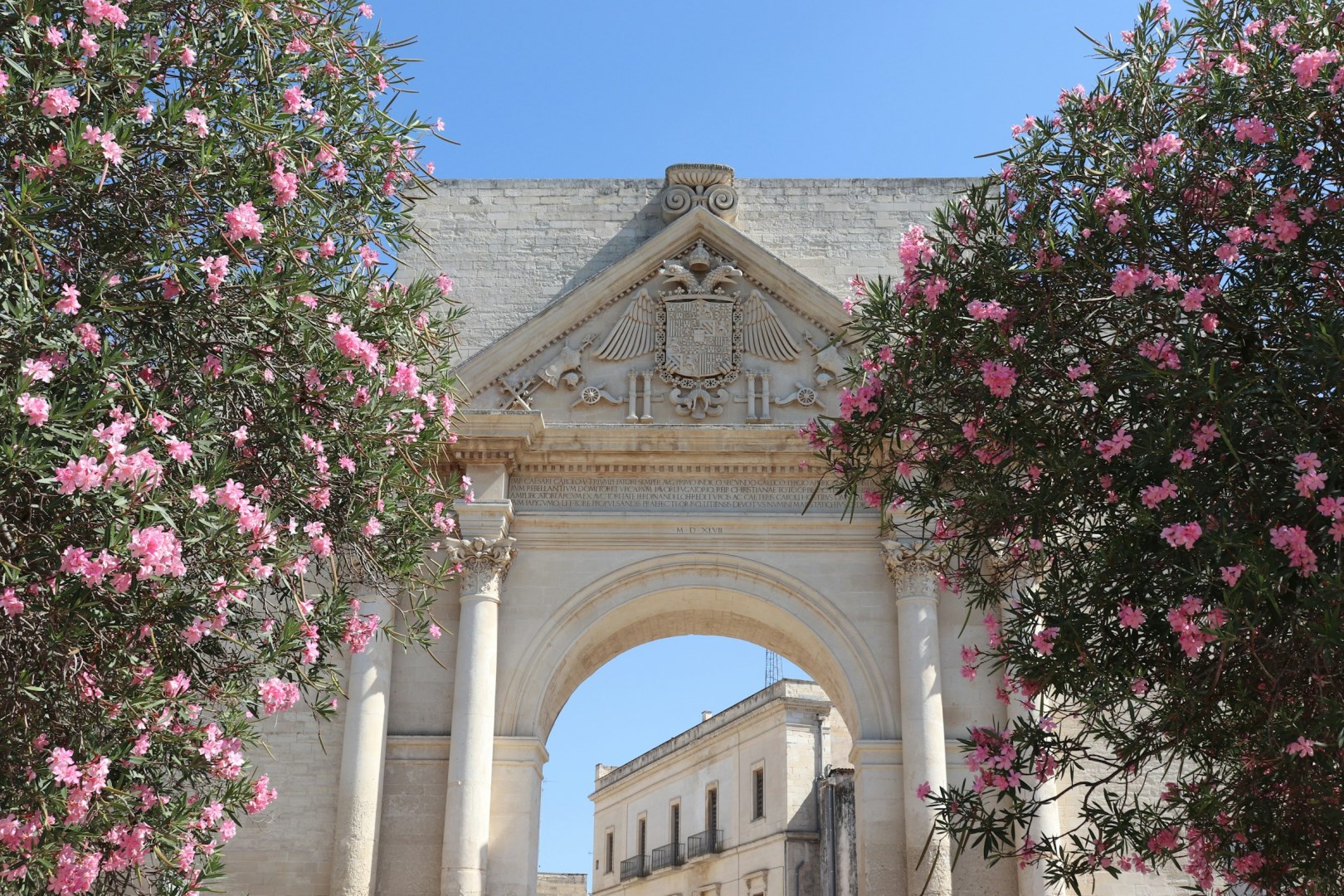
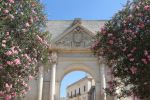
Lecce is a city in southern Puglia, at the center of the Salento peninsula, known for its historic buildings made from the region’s soft, honey-colored limestone. The old center contains elaborate churches, palaces, courtyards, and narrow streets, many decorated with carved columns, figures, floral motifs, and other details associated with Lecce Baroque. Piazza del Duomo and Piazza Sant’Oronzo form two of the city’s principal public spaces, while the Roman amphitheater remains visible at the heart of the modern city. Lecce’s architecture gives the city a distinctive visual identity closely tied to local stoneworking traditions.
Lecce’s cultural heritage reflects layers of Messapian, Roman, Byzantine, Norman, and later southern Italian history. The Basilica di Santa Croce is one of the best-known examples of local Baroque architecture, with an elaborate limestone facade filled with sculpted decoration. The Basilica di Santa Croce and the former convent complex are part of the city’s historic religious landscape, while the Church of Santa Maria delle Grazie stands beside the Roman amphitheater. Local craftsmanship remains important, particularly the carving of pietra leccese, a workable limestone that allowed artisans to create the intricate architectural details found throughout the historic center.
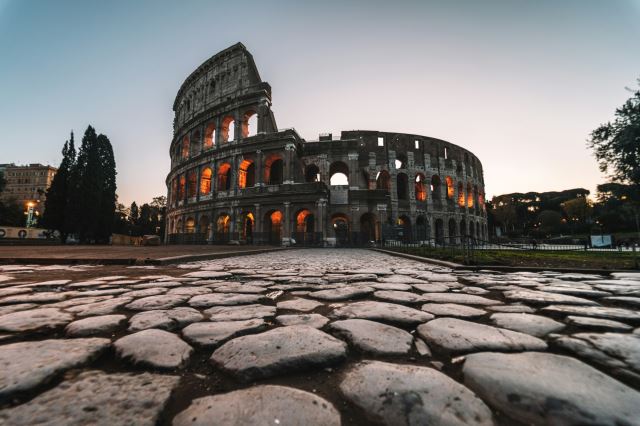
The Roman amphitheater in Piazza Sant’Oronzo is one of Lecce’s most important archaeological remains and once accommodated large public gatherings. Nearby, the column traditionally associated with the end of the ancient Appian Way stands beside the square and supports a statue of Saint Oronzo, the city’s patron. The Castle of Charles V forms another major landmark and now serves as a cultural venue. Beyond the central streets, Lecce provides access to the Salento countryside, where olive groves, dry-stone walls, farmhouses, and small towns extend toward both the Adriatic and Ionian coasts.
Lecce’s food reflects Salento’s agricultural traditions, with dishes built around durum wheat, vegetables, legumes, olive oil, and local cheeses. One of the city’s best-known specialties is the pasticciotto, a small pastry filled with custard and closely associated with the Lecce area. Rustico leccese, made with puff pastry, béchamel, mozzarella, and tomato, is another common local snack. Salento cuisine also includes orecchiette, ciceri e tria, and friselle served with tomatoes and olive oil. Another distinctive feature is the continued presence of artisan workshops, where pietra leccese is shaped into decorative objects using techniques connected to the city’s architectural heritage.
Other Popular Destinations in Italy