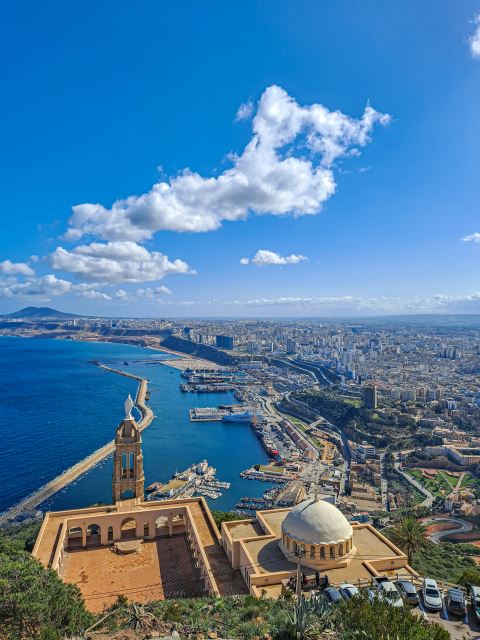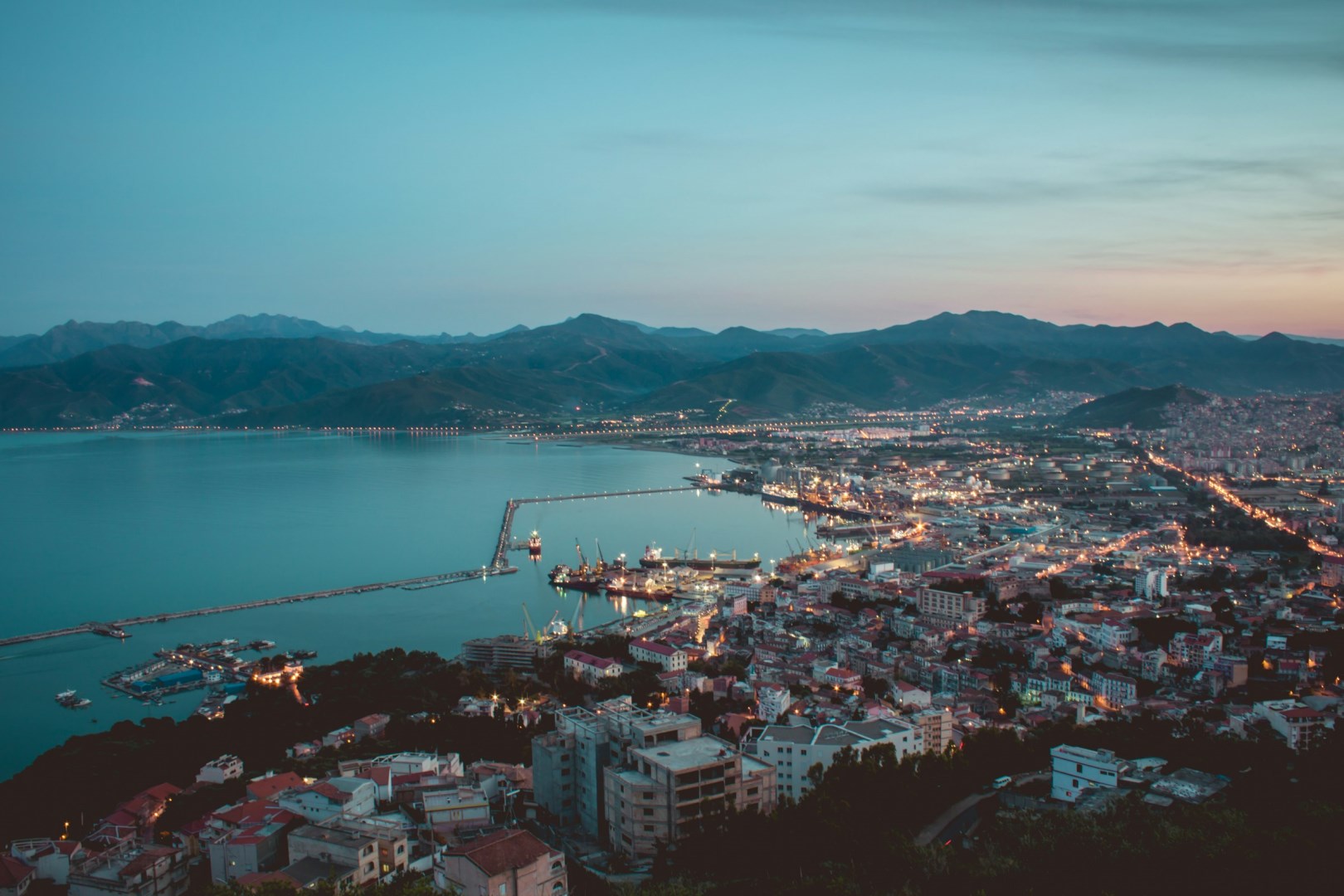

Béjaïa is a Mediterranean port city on Algeria’s Kabylie coast, set between the sea and the wooded slopes of the Gouraya massif. Its setting brings together a working harbour, mountain terrain, coastal cliffs, and beaches within a compact area. The city is one of Algeria’s important historic centres and has long been connected to maritime trade and scholarship. Its position at the meeting point of the Mediterranean and the Kabyle hinterland gives Béjaïa a distinct identity, with Amazigh traditions remaining an important part of local life.
Béjaïa’s cultural identity reflects successive Amazigh, Hammadid, Mediterranean, Ottoman, and Arab-Muslim influences. The historic city contains monuments associated with several of these traditions, including the Casbah, Bab el-Bahr, Bab Fouka, and Bordj Moussa. The city also became known as a centre of learning and commerce, with its harbour helping connect the region to wider Mediterranean networks. Its historic architecture and surviving fortifications provide visible reminders of Béjaïa’s role as an important regional centre.
The strongest natural landmark is Gouraya National Park, which surrounds the mountain overlooking the city and extends along a rugged Mediterranean coastline. Yemma Gouraya rises above Béjaïa, while Cap Carbon projects into the sea and is known for its high lighthouse and coastal views. The park combines forested slopes, limestone cliffs, coves, and marine habitats. Nearby areas such as the Pic des Singes and the Aiguades coastline provide additional viewpoints and walking opportunities, giving the city a close connection between urban streets, mountain terrain, and the sea.
Local food reflects both Kabyle traditions and Béjaïa’s coastal location. Fresh fish and seafood are common around the harbour, while regional cooking also draws on olive oil, grains, vegetables, and traditional Amazigh preparations. A lesser-known detail is Béjaïa’s historical association with the European word for wax candles, linked to the city’s role in the medieval trade of wax. This commercial history illustrates how the city’s maritime connections extended well beyond Algeria and helped make Béjaïa an important Mediterranean port.
Other Popular Destinations in Algeria